Thursday, 8 August 2013

So what’s happened To Muckboots?

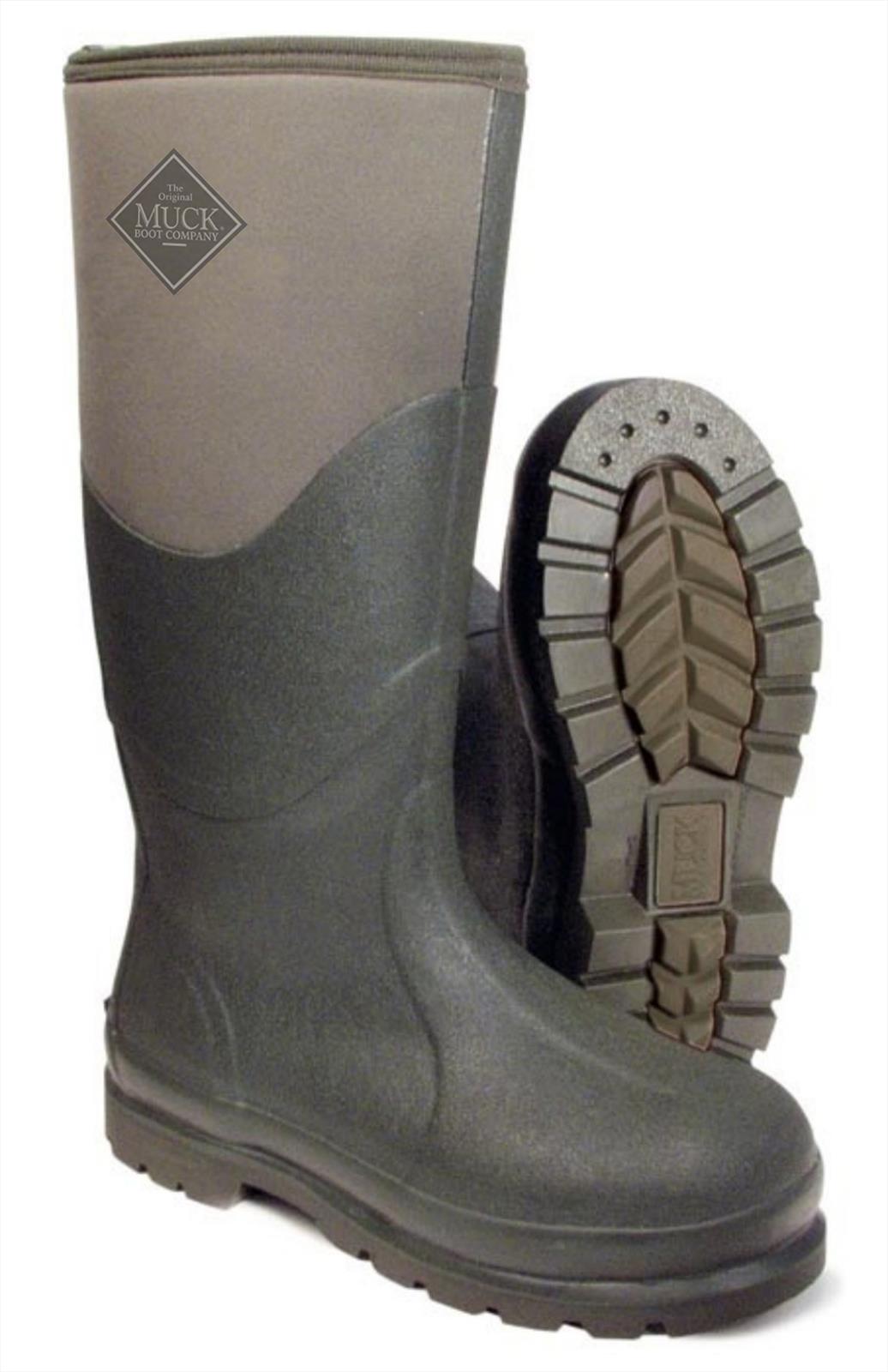
The Original Muck Boot company or Muck boots to the uninitiated, are a brand owned by Honeywell that markets an exceptionally good range of neoprene boots and wellington boots.

The Original Muck Boot Company  began in 1999. The need for a more comfortable wellington boot that did not freeze your feet on a cold winter morning and kept you warm all day has been there since wellies were first used. To wear a wellington boot that felt as comfortable as a pair of your favorite trainers yet offered you all of the waterproof protection of a wellington and the warmth of several pairs of thick woolen sea socks has seen sales sky rocket over the last few years. The traditional premium hunting, shooting, fishing, equestrian brands have suffered significantly as Muck Boot wearers have evangelized about their new discovery.


However, there has been some confusion in the market as Honeywell has sought to rationalize its styles under a set of global common names. There have been several styles sold in the UK that have been named after British rivers such as Spey, Tay, Esk, Tyne, Derwent etc. Honeywell have deemed it necessary to have one style sold in the US or wherever in the world under one style name. Great when you want to buy a Snickers bar in Tokyo, St. Louis or Middlesborough and not have to cope with the old British Marathon bar and get blank looks at a tobacconist in Barcelona. To apply the same logic to a pair of premium willies is frankly bonkers. I only buy my wellies in the UK as I tend not to shop for practical footwear on my worldwide travels, I am too busy taking in the new experiences and environments.

That said, we felt a duty to explain what was and what now is…….

‘Spey’ is now ‘Woody Max’. Quite why a pair of hunting wellies should be named after a character in Toy Story is beyond the wit of most, although they have alluded to Woody having visited MacDonalds a tad too many times.

‘Tay’ is now ‘Muckmaster’. Why? No idea. Perhaps our cousins thought that Muckmaster was a more romantic name than Tay.

‘Tay Sport’ is now ‘Arctic Sport’. The most logical change of the lot as these are rated to cope with some stupidly low temperatures.

‘Esk is now ‘Chore 2K’. Sorry but I cannot think of anything to say about this name change.

‘Derwent is now ‘Chore Hi’. As above.

‘Humber’ safety wellies are now ‘Chore Safety’ or at least will be in Mid-October when the new stock arrives. (We have lots of Humber left as we were sneaky and bought up oodles of stock when we saw the changes coming but be quick – they are going fast).

‘Tyne’ riding boots are now ‘Colt Ryder’. And I thought that my spelling was poor.

There are more but these are frilly pink and purple versions that are worn in the garden and don’t fit well into a working environment.

It may be a bit irritating – all these name changes and American at that. But it does not take away the fact that they are exceptionally good at what they do. I binned my traditional willies several years ago when I first bought a pair of Tay (sorry, Muckmasters). I can wear them for ten hours a day and not feel the slightest bit tired due to aching feet. What other wellington boots can you say that about?

Granite Workwear – We only sell the good stuff.


Tuesday, 26 March 2013

Workwear Clothing

J.D. Power and Associates ran some research for the textile industry in North America a few years ago and found that customers are more inclined to do business with employees who wear uniforms because they stood out as professionals and were seen as being more competent and knowledgeable. Those survey results are just as true today and can translate into real bottom line benefits for those companies choosing good quality work wear for their employees. Saving a few pounds and having a workforce that does not look its best is false economy. If you are going to do it then do it properly.

The top ten reasons that businesses should opt for a well put together uniform programme are:

Create an attractive business image. For better or worse, society tends to judge people by how they dress. Selecting an appropriate employee uniform can immediately establish a professional business image that attracts and helps retain customers.

Free advertising. Well designed work uniforms worn in public become walking posters, promoting a company's products and services free of charge.

Improve customer relationships.
Work uniforms immediately identify company representatives who can be approached for purchasing information, thereby improving overall customer service.

Protect the workforce.
Uniforms deliver functional benefits, like wearer safety. For example, high vis uniforms can help protect workers from being struck. Flame resistant (FR) workwear can help prevent injuries caused by accidental flash fires.

Promote a Brand. When employees wear uniforms displaying corporate logos and colours, they help brand and differentiate their business. But remember – whatever you do, do not save a few pennies on an ‘OK’ embroidery or print. Make sure that it looks perfect. This is your company that you are promoting, not some average, run-of-the-mill competitor.

Prevent product cross-contamination. Uniform programs designed specifically for the food or healthcare industries can help reduce cross-contamination threats; those constructed to dissipate static electricity can help prevent damage to sensitive electronic components.

Improve security. Company uniforms featuring specific styles or colours quickly identify who does or does not belong in specific work areas or on job sites.

Create team spirit
. Probably the most under-rated benefit of good quality uniform. Make your employee feel important – he or she is your best sales person. Work uniforms promote a sense of team spirit and a sense of belonging. This, in turn, can improve worker productivity.

Employee benefit. Employer provided uniforms save employees money.

Promote company pride. Work uniforms help in-still a sense of pride and responsibility and can convert employees into "brand ambassadors" outside the actual workplace.

All this is not rocket science. Your accountants will probably have a view that uniform and Workwear is an unnecessary cost centre. Nothing could be further from the truth.

Monday, 4 February 2013

New Range Of Unilite Torches At Granite

At Granite we have extended our collection of professional Unilite touches in order to provide you with the highest quality of next generation LED flashlights, lanterns and headlights suitable for using in demanding work conditions.

Unilite uses only the highest specification components in all of their torches, such as ultra-powerful LEDs from leading chip manufacturers. Each individual component used is picked and tailored specifically to suit industry specific applications.

Here is a snippet of just some of the Unilite products we stock:

Unilite Prosafe PS-T1 Waterproof LED Torch

This waterproof torch is ideal and can even be used for recreational diving with its rubberised head for increased durability and its contoured non-slip rubber grip body. With a beam range of 150 meters and a battery life of 7 hours, this torch can be used as a very handy security light especially because it comes complete with a SOS flash setting for emergency signalling.

Unilite Prosafe PS-FL6R Rechargeable Torch


This little yet powerful touch has a beam range of 250 meters which can last for just over eight hours. Once it’s flat, you don’t have to worry about finding some new batteries as you can simply recharge the battery using the indoor charging base adapter. This hand held touch is the ultimate small torch for emergency services, police support (PSU) and security applications.

Unilite PS-L3RK Rechargeable LED High Vis Torch


Hate torches which require disposable batteries? The robust Unilite PS-L3RK is the perfect solution to avoid the small fortune of replacing batteries as this torch comes with a side charging point so you can easily recharge your batteries. Key features include a 135 degree rotational swivel head, water resistant casing and a 160 Lumen LED Spotlight which lasts for 10 hours.

Unilite PS-LR5 LED Spotlight

This top quality torch comes complete with a 160 Lumen Rotational LED Spotlight and a RED LED light for signalling which can last up to 6 hours. If the battery runs out just pop it in the supplied rapid charger adapter and your good to go again. Don’t be afraid of dropping this spotlight as it has a rubberised base for a greater shock resistance and it is also chemical resistant making it ideal for demanding work conditions.

To view our full product collection of Unilite torches visit Granite Work wear online or get in touch by calling us on 0115 964 0111.

Monday, 7 January 2013

Safety Footwear Standards

You use them for probably 8 hours a day so what you wear on your feet really matters. Getting the right footwear will make life safer and easier. Wearing the wrong footwear can distract you with the pain or make you prematurely tired which has direct implications on safety and efficiency. Saving a few pounds by buying safety boots and shoes is frankly bonkers.  Employers are legally responsible for providing the correct footwear so get it right. Not only will your employees thank you for it and feel more valued, the boss should also be impressed with lower accident figures due to fatigue and better productivity.

EN345 / EN ISO 20345:2007

The safety footwear standard is referred as EN345, EN ISO 20345:2004, and EN ISO 20345:2007. All footwear designed before 2004 and still manufactured up to today carries EN ISO 20345:2004. However, there have been a lot of material and design improvements in the last 8 years so make sure that footwear carrying this standard is up to the mark. EN ISO 20345:2007 is the latest standard for footwear designed or retested after 2007 and this standard sets out minimum requirements that safety footwear must be successfully tested against.

The standard specifies all safety footwear must have toe protection. All Safety Footwear in this standard is at least SB which means it has toe protection against a 200 Joule impact.

Please note that there is another standard, EN346 which requires protective footwear to withstand a minimum impact of 100 Joules but we will not be dealing with this here as the majority of safety footwear being sold is EN345 compliant.

In addition to this there are different protective features for footwear that are represented by a combination of letters.

Rating Features:

SB 
SB-P P
S1 A + FO + E
S1-P A + FO + E + P
S2 A + FO + E + WRU
S3 A + FO + E + WRU + P
S4 A + FO + E + Waterproof
S5 A + FO + E + P + Waterproof


Toe protection (SB):


Toe protection must withstand a 200 joule impact. A joule is the unit of energy and this standard is very specific. A heavy weight falling from a low height could have a lot less energy than a lighter weight falling from a much higher height. As well as impacts the toe area must withstand a resting mass of well over one metric Tonne.

It is important to note that the protection does not have to be steel. In fact, alternative non-metallic protection, sometimes referred to as composite or even aluminium can be equally as strong but lighter. Lighter boots can be significantly more forgiving on your lower back over long periods of time.

The rating SB indicates that the safety footwear has a minimum 200 joule toe protection, it can have additional features but it is the most basic and essential for safety footwear.

SB-P:

SB-P has the same features as the SB rating with the addition of the midsole penetration protection.

S1:

S1 in addition to the 200 joule toe cap, is classed as antistatic footwear and the sole is also resistant to fuel oil and has energy absorption in the heel area.

S1-P:

S1-P has the same features as the S1 rating with the addition of the midsole penetration protection.

S2:

S2 in addition to the 200 joule toe cap, is classed as antistatic footwear and the sole is also resistant to fuel oil and has energy absorption in the heel area. It also has a water resistant upper.

S3:

S3 has the same features as the S2 rating with the addition of the midsole penetration protection.

S4:

S4 in addition to the 200 joule toe cap, is classed as antistatic footwear and the sole is also resistant to fuel oil and has energy absorption in the heel area.

S5:

S5 has the same features as the S4 rating with the addition of the midsole penetration protection.

All safety footwear can have more features than are listed above but these are the minimum requirements to meet each of the safety ratings. So you could have a S1 CI or S1 HI. We have listed the main ratings above. There are more but these are the most common.

Key Description:

Antistatic protection (A):

Clothing, seating materials, and climate factors can cause a build up a static charge of electricity in the body. Some materials in footwear can over insulate the body causing the charge to be held. When you then touch something the charge can rush from your body quickly causing a spark and a small uncomfortable shock. Antistatic footwear will significantly reduce this effect but does not offer full protection for exposure to electronics and explosives work. You will need Electro-Static protection, often referred to as ESD, for this.

Electro-Static Discharge (ESD):

ESD footwear is designed for the electronics, gas and explosives industry and has to meet ESD CEI EN61340-5-1 standard. This footwear has a significantly lower resistance and allows the current to pass to earth more easily. Please note however that there are other factors that need to be taken into account when kitting out your personnel working in such industries. What other clothing are they wearing in order for the charge to earth through the footwear and, as odd as this may sound, we have anecdotal evidence that suggests that ‘larger’ personnel wearing ESD footwear can sometimes fail an overall earthing test.

Midsole penetration protection
(P) - SB-P, S1-P, S3, S5:

Sharp objects where we walk and stand are significant risk not only in the workplace but also outdoors and at home. Midsole protection will guard against nails and other objects. To meet this standard the footwear must be able to resist a penetration force of 1100 Newtons.
Midsole protection is provided by using one of several methods:

Stainless steel or Aluminium insert in the sole.

Kevlar / Lenzi  or other flexible fabric insole.

The Aluminium and fabric solutions are the most flexible and lightest and cover the greatest area of the foot and the fabric insoles also offer much higher thermal insulation.

Insulation against heat (HI):

Insulation against heat: tested for 30 minutes at 150°C.

Insulation against cold (CI):

Insulation against cold: tested for 30 minutes at 1 -20°C.

Energy Absorption (E):

Energy Absorption in the heel region.

Heat Resistant (HRO):

Heat resistant Outsole: To resist 300°C for 60 seconds.

Resistance to fuel oil of outsole
(FO):

Water Resistant Upper (WRU):

Water resistant upper, not used on all rubber or polymeric footwear.

Metatarsal (M):

Safety boots or shoes with metatarsal protection.

Cut Resistance (CR):

Safety shoes or boots with cut resistance.

Non-metallic footwear:


Safety footwear containing no metal parts are ideal for workplaces with metal detectors like airports eliminating the hassle of removing them and remember, lighter boots can be significantly more forgiving on your lower back.

There are several other classifications which need to be considered such as:-

BS4676:2005 for use in molten metal environments.

EN13832-2 (&) 3: 2006 Footwear protection against chemicals.

EN15090: 2006 Footwear protection for fire-fighters.

EN ISO 17249:2004 Safety footwear for use with chainsaws.

EN5321:2000 Electrically insulating footwear for working on low voltage installations.

BS7971-5:2004 Footwear protection for use in violent or training situations.

Notes:

CEN/ISO TR 18690:2006 Guidance for the selection use and maintenance of safety, protective and occupational footwear.

For information on how the various performance levels and classifications are assessed and their relevance to practical situations, contact:

HSL-Personal Safety Unit in Buxton on: 01298 218329.
Sunday, 30 December 2012

Get Ready For A Warm Winter With Granite Workwear

This month stay warm whilst working with Granite’s collection of thermal wear from Xcelcius. Our next to skin thermal garments will take the chill away when working on outside projects or in cold environments.Within our collection we stock a wide range of thermal underwear, balaclavas, hats and gloves from as little as £1.75.

Xcelsius Supertherm Knitted Hat XST16

Keep your head warm in the freezing temperatures this winter with our Xcelsius Supertherm Knitted hat, specifically designed to keep you warm even if the temperature drops down to minus 5° Celsius. Made from blended viloft fibres with polyester, viloft is made from wood pulp which increases thermal performance. The natural wicking properties in the viloft will keep your skin dry and warm, which is ideal for aerobic activities and outdoor sports.

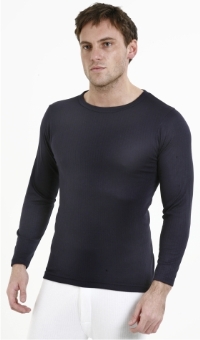
Xcelcius Thermal Underwear Long Sleeve Top XPV01

The Xcelcius Thermal Underwear Long Sleeve Top will feel like a second skin as it’s made out of blended soft viscose and polyester. This fabric is also very light and comfortable, so it’s suitable for wearing at work all day. You can wear this thermal top under any garment as its ideal for providing a performance layered base for everyday use. Not only can this garment be washed without losing its shape but it is also suitable for temperatures down to -5° Celsius.

Xcelcius Thermal Underwear Long Pants XPV03

The Xcelcius Thermal Underwear Long Pants transports moisture away from the skin through the fabric by the capillary action of the fibre, which allows you to stay warm throughout the day. This style of pant has a modern cut and fit so you can easily slip your trousers on over the top. Made from blended soft viscose and polyester, this garment is suitable for temperatures down to -5° Celsius.

Our complete collection of affordable thermal clothing will keep you protected and safe throughout winter. For the use in the most demanding conditions view our full product collection at Granite Workwear online or get in touch by calling us on 0115 964 0111.

Friday, 30 November 2012

Professional Unilite Torches at Granite

This month why not view our collection of the best high visibility technology touches by Unilite, a pro-safe approach to staying well lit and safe in working conditions.

With vast research into LED development and the drive to produce innovative designs Unilite has created products with breakthrough focus control, electronic dimming configuration and induction technology, alongside existing product developments in lenses, reflectors, micro-switches and industrial use of materials such as high strength co-polymer.

Unilite as a brand works hand in hand with Granites message of producing durable and well-designed products by using the highest possible specification components in all of their products.

At Granite we stock the Unilite PS-H range as well as the Unilite HV-H head torches which are impact resistant, waterproof and chemical resistant head torches.

Unilite PS-H1 Head torch

This Unilite head torch supports some truly outstanding features such an a scientific optical fraction lens, a beam range of 45 meters and a battery life of 8 hours and an emergency red flash function all for just £21.54.

Unilite PS-H5 Head torch
With two different power settings you can have this torch on for up to 36 hours! That’s not all, this product features infrared no touch on-off facility which is very useful when wearing working gloves, a beam range of 120 metres, and a 180 Lumen white CREE LED, costing only £47.94.

Unilite HV-H4 Head torch

The Unilite HV-H4 sports a collimator lens as well as a beam range of 85 meters, a battery life of 16 hours when on full power and a 165 Lumen white Luxeon LED. Priced at £42.00, this is a great head torch for working on railways and highways.

All of the head torches come with a free set of helmet clips which work well with any safety helmet such as the  Peltor G3000 or the Venitex Diamond V.

For the use in the most demanding conditions view our full product collection visit Granite Work wear online or get in touch by calling us on 0115 964 0111.

Friday, 5 October 2012

New for October- A new and well developed range of Rock Fall Safety Footwear

At Granite this month we are extending our safety footwear collection to include the addition of a new range of Rock Fall Safety boots.

This range of lightweight safety footwear, all with composite toe caps and midsoles, is perfect for working on rail projects, civils and quarrying. Keep your feet safe and put less stress on your lower back – you will be a lot fresher at the end of a hard day.

The Rock Fall ‘Flint'

Now in stock is the Rock Fall ‘Flint’, with a lightweight composite toecap and anti-penetration protective midsole. For just £42.95, the ‘Flint’ provides excellent value for money – this water resistant safety boot is ideal for walking on ballast with its shock absorbing footbed making it the perfect footwear for the rail industry and ground works.

The Rock Fall ‘Titanium’

Later throughout this month you will be able to order the ‘Titanium’ and ‘Alaska’ Rock Fall safety footwear. The ‘Titanium’ safety boot is waterproof and features R-Ten abrasion resistant stitching thread and a lightweight composite toe cap and midsole. Perfect for the rail industry, utilities, civils, quarries and highways, this product is priced at just £59.95.

The Rock Fall 'Alaska'

The lightweight ‘Alaska’ Rock Fall safety boot has a temperature operating range of between –40°c to +300°c, as well as featuring Thinsulate© B600 thermal lining and a slip resistant rubber sole. Only £59.95 these boots are perfect for when the temperatures really drop.

For the use in the most demanding conditions, Rock Fall safety footwear will endure the toughest of situations, to view our full product collection visit Granite Workwear online or get in touch by calling us on 0115 964 0111.