Showing posts with label Granite workwear. Show all posts

Tuesday, 12 April 2016

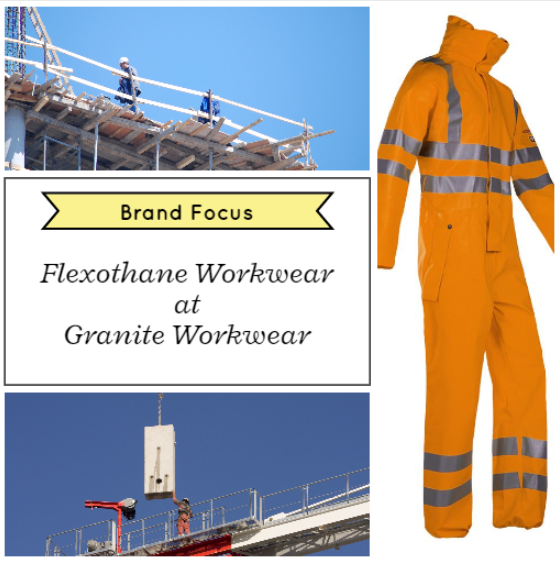
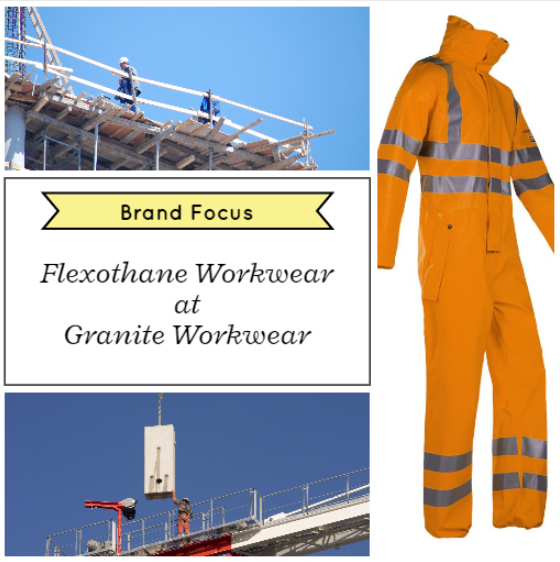
Brand Focus – Flexothane Workwear at Granite Workwear

One of our biggest ranges we stock here at Granite Workwear is Flexothane, on site you can pick and choose between the three brands within the range: Essential, Flame and Kleen.

What is Flexothane?

There are several reasons why this fabric is special, for example it's taken many years of research and development to get to the standard used in today's workwear. Without trying to get too scientific Flexothane is a polyurethane coating on top of a knitted base fabric. This fabric provides excellent protection as the polyurethane coating is stretchable (approximately 150%) and the knitted base helps make it waterproof and windproof, noiseless and highly tear resistant. Up to 50% lighter than conventional waterproofs and extremely, this fabric is also resistant to oil and fungal growth.

Garments produced from Flexothane are durable and easy to care for, this stretches across all the three brands we sell, however there are a few slight differences:

Flexothane Essential

The Essential is ideal for lighter workwear duties along with domestic requirements. No garments in this range are hi-vis but just like the flame and Kleen range every item is fully wind and waterproof as well as being lightweight and breathable. Perfect for leisure!

Flexothane Classic

The Classic collection is made from a one-sided PU coating on a polyamide knitting and  has been designed for those who work in the following industries: horticulture, agriculture, grounds maintenance. 

Flexothane Flame

Flexothane Flame, the name gives it away but this is made from flame retardant Flexothane. This category features many garments that meet several workwear standards for various professions, just click the product you're interested in and we have outlined what standards it complies to. With high frequency welded seams, this clothing is 100% waterproof and windproof.

Flexothane Kleen

Flexothane Kleen has been designed specifically for the food preparation industry, all garments are washable at 95 °C. The royal blue colour used for the majority of this collection is ideal should any part of the garment become caught in the food items it is very easy to see. 

Flexothane Anti-static 

Made from flame retardant and anti-static Flexothane, the conductive yarn  avoids the building-up of static charges -that could ignite an explosive atmosphere.
Flexothane Flame 9728 FR High Vis Jacket


Before the introduction of Flexothane, waterproof garments were often heavy, cumbersome, uncomfortable, as well as hard to maintain. This is a technical fabric that promises you excellent protection and will be around for many more years to come. 

Wednesday, 6 April 2016

Receive A FREE FXD Beanie With Selected FXD Orders

Whilst stocks last we are offering a FREE FXD beanie when you buy any FXD work pants or jean on Granite Workwear, this offer is completely exclusive so make sure you don't miss out.

We're among the first FXD Workwear sellers in the UK. Originally from Australia, Function By Design (F.X.D) offer carefully designed workwear that performs better and looks killer whilst doing it.And because they're made with Duratech material, they'll stay looking good for longer.

Below are some of our favourites sellers from the FXD range that are included in this great detail:


This offer is only valid for a limited time only!

Tuesday, 1 March 2016

Exclusive Granite Offer - Receive A Free Bootbag With Selected Boot Orders

We have a very special offer for all of customers, recieve a FREE boot-bag worth £20.34 with Muck Boot and Grubs Thermal boot orders.

This bag is fantastic to throw in the back of the car and keep everything clean. Made from waterproof fabric and vented, you can avoid that soggy feeling and damp odour that you can get when you use your much loved Muck Boots.


Whilst stocks last we are offering a FREE boot-bag with selected boot orders on Granite Workwear, this offer is completely exclusive so make sure you don't miss out.

The selected boot orders include:


Monday, 1 February 2016

Hearing protection – what should I choose?


Risk assessments should involve understanding the level of noise within the working environment. Sound measuring can be used to select the type of hearing protection that is required but as a guide we have listed the main features that should be considered when selecting the solution:-

Remember when reviewing the requirements that noise energy doubles every 3dB – it is not a linear scale….


So what should I choose?

The European Physical Agents (Noise) Directive 2003/10/EC came into force in 2006. In simple terms, the Directive requires that hearing protection should be available at 80dB, and must be worn at 85dB. As a rough guide, when it is necessary to shout in order to be heard 1 meter away the noise levels may be 85dB or more.

Firstly, ensure that the product conforms to EN352. There are three basic standards to take into account. When selecting the ear defenders you must ensure that the products are certified to one of the following standards:-

Ear Muffs EN 352-1:
Ear-Muffs: Two ear cups that are filled with sound absorbing foam. Each cup has a soft pad that is either foam or foam and liquid filled. The ear cups are held in place with a tensioned neckband or headband.

Ear Plugs EN 352-2:
Ear-Plugs that are inserted into the ear canal to seal the entrance.

Helmet Mounted Ear Defenders EN 352-3:
Ear defenders that are designed to be attached to industrial safety helmets. They are adjustable, so they can be positioned over the ear when required.

There are additional standards for more specific products as follows:-

EN352-4: Level dependent ear muffs.
EN352-5: Active noise reduction ear muffs.
EN352-6: Ear muffs with electrical audio input.
EN352-7: Level dependent ear plugs.
EN352-8: Entertainment audio ear muffs.

SNR (Single number rating).
This is the number of potential decibels the hearing protection will reduce the noise by when correctly fitted.

The objective is to select a suitable product that reduces the wearer’s noise level down to between 70dB & 80dB. To reduce the noise level to below 70dB may impair the wearer from hearing any alarm or warning sounds.

HML (relates to frequency)
H=High.  M=Medium.    L=Low.  This relates to how the product performs within these general frequency bands. The values of each of these (attenuation levels) will be located on the product packaging. Note that a SNR of 27 will not necessarily be attributable to all frequency levels – this should be considered when selecting a product for a specific frequency.

Summary:

The ear is very delicate. The damage that can be caused is often non-recoverable. Figures from HSE show that during 2006/7 280 instances of work related hearing loss were diagnosed. However, as hearing loss is cumulative over a period of years, many individuals will not realise that their hearing is being affected.

Friday, 1 January 2016

Arc Protection with Granite Workwear

The risk posed by electricity on the rail network is made clear by Network Rail’s Life Saving Rules.

Three rules deal specifically with electricity: never assume equipment is isolated - always test before touch, with an approved method, this is not Scalextrix, you do not test with any part of your anatomy!

Always test before applying earths or straps and always be sure the required plans and permits are in place before you start a job or go on, or near, the line.

The consequences of not following these steps when working around 25 KV overhead lines is all too real. But even when all the rules are followed, accidents can occur. Equipment failure is another real risk.

The majority of orange fire resistance (FR) work-wear being used on the rail network today does not comply with the GO’RT 3279 high visibility standard, even though they include silver reflective tape in the EN configuration.

Two new products

Pulsarails Combat Coverall and Combat Trouser are flame retardant, anti- static and electric arc protective and comply with GO/RT 3279.

Using a patented Protex multi-fibre blend - Protal 5, the range has a 16 Cal/ cm2 ATPV rating, virtually double the performance of the next market-leading fabric. Combined with the Xcelcius Electric Arc Base Layers, the level of protection increases to 42.6 Cal/cm2.


Some of the benefits of Protal 5 include excellent breathability and wicking properties, as well as an enhanced electric arc performance because of its ability to shed the metal electrodes from an arc blast. When welding, it sheds sparks and molten metal, extending the life expectancy of the coverall.
Unlike all of its current competitors it also has excellent abrasion resistance.

On top of its safety credentials, the Combat Coverall has been designed with the wearer in mind. The coverall includes breast, combat and rear pockets, an elasticated waist and adjustable cuffs. The triple stitched inside leg, front and rear rise seams, and five extra crotch bar tacks reduces the risk of splitting.

Other features include non- conductive plastic studded wrap around cuffs, a front storm flap - which conceals a two-way plastic zip, internal knee pad pockets and double stitched FR reflective tape in the chevron design.

The Combat Trouser has all the attributes of the Combat Coverall but with a slightly elasticated waistband and triple press stud fastening and zip fly.

To be worn in conjunction with the Pulsar FR Combat Trouser, the Pulsar FR high-visibility orange Class 3, GO/ RT 3279, flame retardant polo shirt incorporates 3M Scotchlite thermally- applied reflective tape, FR collar and cuffs, and concealed three button placket.


If it gets a little chilly, then why not layer up with the Pulsar FR high visibility orange Class 3, GO/RT 3279, flame retardant sweatshirt. Again, both garments are manufactured using a Protal blend of FR fibres to guarantee the highest level of performance without compromising on comfort or fit.

The Xcelcius Electric Arc Base Layers are manufactured from a knitted Protal- blend and comply with EN11612 (FR), EN1149 (AST) and IEC61482 (Arc) standards. Both top and bottoms have a 9.2 Cal/cm2 ATPV rating. When worn in conjunction with the double- layer balaclava, it ensures maximum next-to-skin protection. All styles incorporate red contrast FR thread.

Granite Workwear is probably the largest stock-holder in the country of Pulsar and Pulsarail products. If we don’t have it in stock then it’s probably not in the country!

We  are also a RISQS accredited supplier to the Rail Industry.


Monday, 2 March 2015

GO/RT 3279 Railway Group Standard

These details are correct as of 27th May 2014. If in doubt search for GORT3279 Issue 8 dated 1.3.2014 which currently specifies the latest amendments to the standard.

You may be carrying out maintenance work on track, where no trains are running – called 'green zone working'. However, work is undertaken on active railways, during day and night, and under different weather conditions. In this 'red zone working', the dangers are very real and it is important that the highest levels of visibility are maintained.

The European standard of high visibility garments BS EN ISO 20471:2013 (a recently updated version of EN 471:2003 + A1:2007) permits a small number of fluorescent background materials, the railway standard specifies one colour only -  Orange.

But this is not just any orange. No orange high visibility garment without the GO/RT 3279 specification is certified for use on UK railways on the line-side or on or near the line.

The garments need to exceed the requirements in EN ISO 20471 (EN 471) for both the minimum area of the orange background material and retro-reflective tape used in the garment. Also, the orange colour must meet the highest level of photometric performance criteria that is specified within the standard. Hence the products must be tested and certified to this standard. These garments must also meet with the requirements for Class 2 garments as set out in BS EN ISO 20471.  If in doubt, request a copy of the certification from your PPE supplier. These should be available on demand. There is an exception for mini-vests ‘Where duties require the use of high visibility clothing, but the nature of the work does not involve possible obscuring of the high visibility clothing, a high visibility mini-vest having a reduced area of visible material, conforming to section A.4 of this Appendix, is permitted’.

On or near the line is defined as ‘within 3 meters of the nearest rail of any line and on the line itself’. ‘On a platform this applies to only the part of the platform within 1.25 meters of the platform edge and only when an engineering or technical activity is taking place’.

Line-side is defined as ‘the area between the boundary fence and the point that is called ‘on or near the line’, and where someone would be within view of the driver of an approaching train or movement’.

Additional PPE that is mandatory to be worn ‘on or near the line or on the lineside is:                   Safety helmet (these should be supplied with a chinstrap where there is a danger of them falling off) – that complies with BS EN 397. Bump caps complying with BS EN 812: 1998 do not meet the requirements for safety helmets, but may be worn as an alternative to a safety helmet by those engaged in working on rail vehicles below sole-bar level.

Safety footwear that complies with BS EN ISO 20345 that provides support to the ankles and includes mid-sole protection and had a covered toe cap. Rigger boots do not meet these requirements for ankle protection.

There are exemptions for certain operations and these are listed in Network Rail reference NR/SP/OHS/021 dated February 2007. If in doubt then refer to this publication.

Other exemptions may be granted by an application to Network Rail Head of Occupational Health and Safety for approval and shall be accompanied by a supporting risk assessment.

Myth Buster:

Some myths, probably by suppliers of GO/RT 3279 clothing, have suggested that there are various additional requirements which need to be met in order to sell more of their own products over their competitors. Most of it is made-up so we just want to clarify a few points.

Printing / Logos:

The GO/RT standard states that the visible materials of the garment must not be compromised by the addition of company names or logos. This does not mean that no logos or prints are allowed. It means be sensible - that the area covered by the prints must not affect the purpose of the garment which is to be noticed. Black, reflective and coloured printing is allowed.

The current wording in the standard (NR/L2/OHS/021, Issue 3) on this is:

‘The outer layer of the upper body clothing shall be clearly marked between the vertical retro-reflective bands’ (silver stripes) ‘on the back with the name or logo of the individual’s Sentinal sponsor or other name or logo agreed with Network Rail (e.g. project, sponsor’s parent company or trade association). This may be in colour or black and either screen printed or incorporated within a panel, which may be retro-reflective.’

Retro reflective stripes above the knee on trousers:

Some of our customers have stated that they have information from a reliable source that Network Rail is planning to change their standard/policy on work trousers to state one band must be above the knee. Not true, the minimum standard required by Network Rail for work trousers to be worn  is BS EN471: 2003 Class 1 and GO/RT3279.

As from 1st January 2009, all maintenance staff going on or near the line must wear all orange PPE. This was referred to as the ‘All Orange PPE initiative’. The move to all orange meant the addition of orange high visibility trousers (or over-trousers) to the  PPE requirement. The instruction applied to all staff and contractors who work for maintenance or who come to work in maintenance worksites. This included anyone from outside of maintenance but working under the protection of a maintenance COSS. This also includes Supervisors and Managers.

As an additional note – shorts are not permissible.

Hoods on garments – should they be tear-off?

Is there a guide for wearing / not wearing hoods on waterproof or any other GO/RT3279 garments? There is nothing mandatory with reference to having or not having a hood permanently or temporarily attached to a garment. Obvious safety concerns would mean that if you were working on or near the line then a tear-off hood would be advisable to take into account any snagging issues. Advice / comments from Network Rail when querying this issue in 2009 stated ‘No hoods to be worn. We would much prefer garments not to have them at all, detachable or not.’ However, this is NOT written in the GO/RT3279 standard at the time of writing.

Thermal balaclavas:

Unlike hoods, Balaclava’s with Mesh Ear apertures  are permitted , advice from Network Rail in 2010 stated that the reason for mesh ears (in balaclavas) is to make sure the product cannot prevent the wearer from hearing a warning given by a lookout or a train driver for example. It is also worth noting that as Balaclava’s are not an item of PPE so they do not have to meet any colour specification.

Waterproof / breathability of foul weather clothing:

In addition to GO/RT 3279, foul weather high visibility jackets and over-trousers must achieve the standard of BS EN 343 class 3 for water vapour resistance and water penetration.

General recommendations by Network Rail:

Any employee or contractor of Network Rail who goes on or near the line or on the lineside shall be required to wear full-length trousers to mitigate against the risks from lineside vegetation and the consequences of slips, trips and falls.

Ideally trousers should be high-visibility and meet the requirements of BS EN471: 2003 and GO/RT3279, however this is not mandatory.

Upper body clothing with full-length sleeves is also preferable, to protect against risks from vegetation and of sunburn, but is not mandatory. However, sleeveless garments, such as singlets or vests, are prohibited.

Sunglasses may be worn, but tinted lenses should be avoided where there is a requirement to distinguish colours accurately. Photochromic (e.g. Reactolite) lenses should be worn with caution; whilst they darken rapidly in bright conditions, they take much longer to clear in dark conditions.
Any PPE identified as necessary through work activity risk assessments shall be provided and used as required by the safe system of work and working instructions. This includes, for example, hearing protection, eye protection, gloves, etc.

Responsibilities:

Employers: shall be responsible for providing their employees with any PPE (including foul weather clothing) which is required by the nature of their job. This shall be provided free of charge and shall be renewed free of charge as and when necessary to ensure that it remains effective in use.

Site managers: shall be responsible for providing any PPE over and above the generic requirements for going on or near the line which may be required on that site. For example, on a particularly noisy worksite, the site manager shall be responsible for providing adequate hearing protection. In addition, site managers shall be responsible for ensuring that any PPE or workwear required for particular locations or tasks is used by employees as required.

Employees: are responsible for using PPE and workwear as required, for keeping it clean and maintaining it in a reasonable condition and for requesting its replacement when it becomes ineffective.

The NR PPE and work wear specification, NR/SP/OHS/021 can be found on the Network Rail Safety Central website.
Wednesday, 12 February 2014

Enough is Enough!

Before the onset of Trench foot we feel duty bound to advise you of the options for some sound waterproof footwear.

The Rocky

Crafted with a supple full grain cowhide leather and a waterproof breathable membrane, the Rocky is another quality safety boot from the V12 stable and has all of the benefits of a top quality walking boot.

Incorporating a waterproof covered zip on the inside of the ankle for easy access and quick release. Perfect for a search and rescue boot.


A lightweight, wide fitting, non-sparking and thermal insulating toe cap and midsole, scuff cap and tough ankle support.

A full bellows tongue helps to prevent the ingress of dirt and water and an ergonomic padded collar provides added comfort when flexing. Inside there is a full and removable shock absorbing footbed made from a non-compressing compo.

The Muckmaster


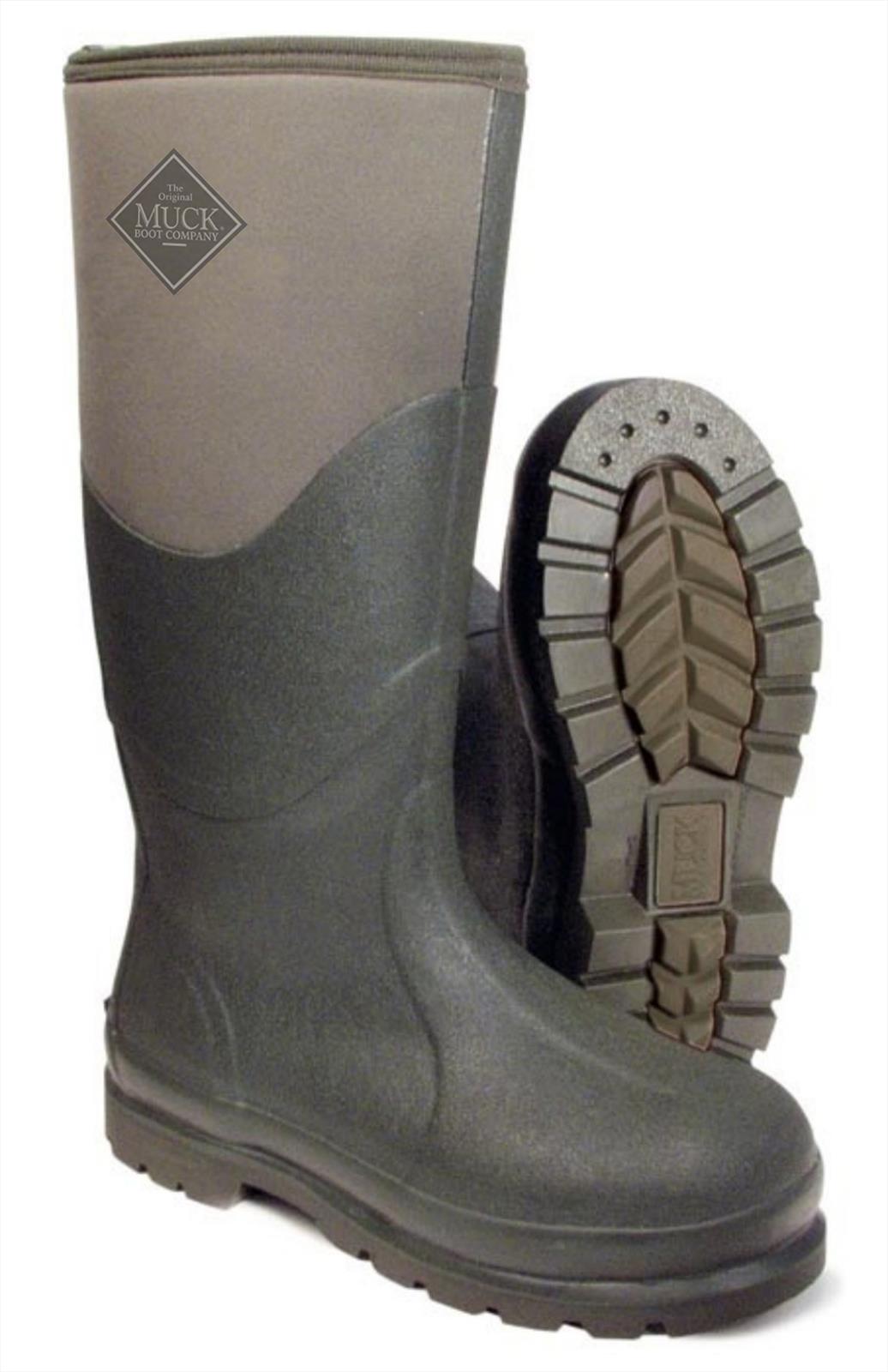
If you need warm, comfortable safety wellies then these are perfect. They are so comfortable that you feel as if you were wearing trainers and wonder why by mid-afternoon on a long shift, your feet don’t ache and why you don’t feel tired. We have a large range of the Original Muckboots in stock.

And for those of you that live near a river, or a stream that is now a river.


In either a safety  spec with toe-cap and mid-sole protection or without. In a tough Texoflex tear resistant fabric.

Granite Workwear – we only do the good stuff.


Thursday, 8 August 2013

So what’s happened To Muckboots?

The Original Muck Boot company or Muck boots to the uninitiated, are a brand owned by Honeywell that markets an exceptionally good range of neoprene boots and wellington boots.

The Original Muck Boot Company  began in 1999. The need for a more comfortable wellington boot that did not freeze your feet on a cold winter morning and kept you warm all day has been there since wellies were first used. To wear a wellington boot that felt as comfortable as a pair of your favorite trainers yet offered you all of the waterproof protection of a wellington and the warmth of several pairs of thick woolen sea socks has seen sales sky rocket over the last few years. The traditional premium hunting, shooting, fishing, equestrian brands have suffered significantly as Muck Boot wearers have evangelized about their new discovery.


However, there has been some confusion in the market as Honeywell has sought to rationalize its styles under a set of global common names. There have been several styles sold in the UK that have been named after British rivers such as Spey, Tay, Esk, Tyne, Derwent etc. Honeywell have deemed it necessary to have one style sold in the US or wherever in the world under one style name. Great when you want to buy a Snickers bar in Tokyo, St. Louis or Middlesborough and not have to cope with the old British Marathon bar and get blank looks at a tobacconist in Barcelona. To apply the same logic to a pair of premium willies is frankly bonkers. I only buy my wellies in the UK as I tend not to shop for practical footwear on my worldwide travels, I am too busy taking in the new experiences and environments.

That said, we felt a duty to explain what was and what now is…….

Spey’ is now ‘Woody Max’. Quite why a pair of hunting wellies should be named after a character in Toy Story is beyond the wit of most, although they have alluded to Woody having visited MacDonalds a tad too many times.

Tay’ is now ‘Muckmaster’. Why? No idea. Perhaps our cousins thought that Muckmaster was a more romantic name than Tay.

Tay Sport’ is now ‘Arctic Sport’. The most logical change of the lot as these are rated to cope with some stupidly low temperatures.

Esk is now ‘Chore 2K’. Sorry but I cannot think of anything to say about this name change.

Derwent is now ‘Chore Hi’. As above.

Humber’ safety wellies are now ‘Chore Safety’ or at least will be in Mid-October when the new stock arrives. (We have lots of Humber left as we were sneaky and bought up oodles of stock when we saw the changes coming but be quick – they are going fast).

Tyne’ riding boots are now ‘Colt Ryder’. And I thought that my spelling was poor.

There are more but these are frilly pink and purple versions that are worn in the garden and don’t fit well into a working environment.

It may be a bit irritating – all these name changes and American at that. But it does not take away the fact that they are exceptionally good at what they do. I binned my traditional willies several years ago when I first bought a pair of Tay (sorry, Muckmasters). I can wear them for ten hours a day and not feel the slightest bit tired due to aching feet. What other wellington boots can you say that about?

Granite Workwear – We only sell the good stuff.


Tuesday, 26 March 2013

Workwear Clothing

J.D. Power and Associates ran some research for the textile industry in North America a few years ago and found that customers are more inclined to do business with employees who wear uniforms because they stood out as professionals and were seen as being more competent and knowledgeable. Those survey results are just as true today and can translate into real bottom line benefits for those companies choosing good quality work wear for their employees. Saving a few pounds and having a workforce that does not look its best is false economy. If you are going to do it then do it properly.

The top ten reasons that businesses should opt for a well put together uniform programme are:

Create an attractive business image. For better or worse, society tends to judge people by how they dress. Selecting an appropriate employee uniform can immediately establish a professional business image that attracts and helps retain customers.

Free advertising. Well designed work uniforms worn in public become walking posters, promoting a company's products and services free of charge.

Improve customer relationships.
Work uniforms immediately identify company representatives who can be approached for purchasing information, thereby improving overall customer service.

Protect the workforce.
Uniforms deliver functional benefits, like wearer safety. For example, high vis uniforms can help protect workers from being struck. Flame resistant (FR) workwear can help prevent injuries caused by accidental flash fires.

Promote a Brand. When employees wear uniforms displaying corporate logos and colours, they help brand and differentiate their business. But remember – whatever you do, do not save a few pennies on an ‘OK’ embroidery or print. Make sure that it looks perfect. This is your company that you are promoting, not some average, run-of-the-mill competitor.

Prevent product cross-contamination. Uniform programs designed specifically for the food or healthcare industries can help reduce cross-contamination threats; those constructed to dissipate static electricity can help prevent damage to sensitive electronic components.

Improve security. Company uniforms featuring specific styles or colours quickly identify who does or does not belong in specific work areas or on job sites.

Create team spirit
. Probably the most under-rated benefit of good quality uniform. Make your employee feel important – he or she is your best sales person. Work uniforms promote a sense of team spirit and a sense of belonging. This, in turn, can improve worker productivity.

Employee benefit. Employer provided uniforms save employees money.

Promote company pride. Work uniforms help in-still a sense of pride and responsibility and can convert employees into "brand ambassadors" outside the actual workplace.

All this is not rocket science. Your accountants will probably have a view that uniform and Workwear is an unnecessary cost centre. Nothing could be further from the truth.

Monday, 7 January 2013

Safety Footwear Standards

You use them for probably 8 hours a day so what you wear on your feet really matters. Getting the right footwear will make life safer and easier. Wearing the wrong footwear can distract you with the pain or make you prematurely tired which has direct implications on safety and efficiency. Saving a few pounds by buying safety boots and shoes is frankly bonkers.  Employers are legally responsible for providing the correct footwear so get it right. Not only will your employees thank you for it and feel more valued, the boss should also be impressed with lower accident figures due to fatigue and better productivity.

EN345 / EN ISO 20345:2007

The safety footwear standard is referred as EN345, EN ISO 20345:2004, and EN ISO 20345:2007. All footwear designed before 2004 and still manufactured up to today carries EN ISO 20345:2004. However, there have been a lot of material and design improvements in the last 8 years so make sure that footwear carrying this standard is up to the mark. EN ISO 20345:2007 is the latest standard for footwear designed or retested after 2007 and this standard sets out minimum requirements that safety footwear must be successfully tested against.

The standard specifies all safety footwear must have toe protection. All Safety Footwear in this standard is at least SB which means it has toe protection against a 200 Joule impact.

Please note that there is another standard, EN346 which requires protective footwear to withstand a minimum impact of 100 Joules but we will not be dealing with this here as the majority of safety footwear being sold is EN345 compliant.

In addition to this there are different protective features for footwear that are represented by a combination of letters.

Rating Features:

SB 
SB-P P
S1 A + FO + E
S1-P A + FO + E + P
S2 A + FO + E + WRU
S3 A + FO + E + WRU + P
S4 A + FO + E + Waterproof
S5 A + FO + E + P + Waterproof


Toe protection (SB):


Toe protection must withstand a 200 joule impact. A joule is the unit of energy and this standard is very specific. A heavy weight falling from a low height could have a lot less energy than a lighter weight falling from a much higher height. As well as impacts the toe area must withstand a resting mass of well over one metric Tonne.

It is important to note that the protection does not have to be steel. In fact, alternative non-metallic protection, sometimes referred to as composite or even aluminium can be equally as strong but lighter. Lighter boots can be significantly more forgiving on your lower back over long periods of time.

The rating SB indicates that the safety footwear has a minimum 200 joule toe protection, it can have additional features but it is the most basic and essential for safety footwear.

SB-P:

SB-P has the same features as the SB rating with the addition of the midsole penetration protection.

S1:

S1 in addition to the 200 joule toe cap, is classed as antistatic footwear and the sole is also resistant to fuel oil and has energy absorption in the heel area.

S1-P:

S1-P has the same features as the S1 rating with the addition of the midsole penetration protection.

S2:

S2 in addition to the 200 joule toe cap, is classed as antistatic footwear and the sole is also resistant to fuel oil and has energy absorption in the heel area. It also has a water resistant upper.

S3:

S3 has the same features as the S2 rating with the addition of the midsole penetration protection.

S4:

S4 in addition to the 200 joule toe cap, is classed as antistatic footwear and the sole is also resistant to fuel oil and has energy absorption in the heel area.

S5:

S5 has the same features as the S4 rating with the addition of the midsole penetration protection.

All safety footwear can have more features than are listed above but these are the minimum requirements to meet each of the safety ratings. So you could have a S1 CI or S1 HI. We have listed the main ratings above. There are more but these are the most common.

Key Description:

Antistatic protection (A):

Clothing, seating materials, and climate factors can cause a build up a static charge of electricity in the body. Some materials in footwear can over insulate the body causing the charge to be held. When you then touch something the charge can rush from your body quickly causing a spark and a small uncomfortable shock. Antistatic footwear will significantly reduce this effect but does not offer full protection for exposure to electronics and explosives work. You will need Electro-Static protection, often referred to as ESD, for this.

Electro-Static Discharge (ESD):

ESD footwear is designed for the electronics, gas and explosives industry and has to meet ESD CEI EN61340-5-1 standard. This footwear has a significantly lower resistance and allows the current to pass to earth more easily. Please note however that there are other factors that need to be taken into account when kitting out your personnel working in such industries. What other clothing are they wearing in order for the charge to earth through the footwear and, as odd as this may sound, we have anecdotal evidence that suggests that ‘larger’ personnel wearing ESD footwear can sometimes fail an overall earthing test.

Midsole penetration protection
(P) - SB-P, S1-P, S3, S5:

Sharp objects where we walk and stand are significant risk not only in the workplace but also outdoors and at home. Midsole protection will guard against nails and other objects. To meet this standard the footwear must be able to resist a penetration force of 1100 Newtons.
Midsole protection is provided by using one of several methods:

Stainless steel or Aluminium insert in the sole.

Kevlar / Lenzi  or other flexible fabric insole.

The Aluminium and fabric solutions are the most flexible and lightest and cover the greatest area of the foot and the fabric insoles also offer much higher thermal insulation.

Insulation against heat (HI):

Insulation against heat: tested for 30 minutes at 150°C.

Insulation against cold (CI):

Insulation against cold: tested for 30 minutes at 1 -20°C.

Energy Absorption (E):

Energy Absorption in the heel region.

Heat Resistant (HRO):

Heat resistant Outsole: To resist 300°C for 60 seconds.

Resistance to fuel oil of outsole
(FO):

Water Resistant Upper (WRU):

Water resistant upper, not used on all rubber or polymeric footwear.

Metatarsal (M):

Safety boots or shoes with metatarsal protection.

Cut Resistance (CR):

Safety shoes or boots with cut resistance.

Non-metallic footwear:


Safety footwear containing no metal parts are ideal for workplaces with metal detectors like airports eliminating the hassle of removing them and remember, lighter boots can be significantly more forgiving on your lower back.

There are several other classifications which need to be considered such as:-

BS4676:2005 for use in molten metal environments.

EN13832-2 (&) 3: 2006 Footwear protection against chemicals.

EN15090: 2006 Footwear protection for fire-fighters.

EN ISO 17249:2004 Safety footwear for use with chainsaws.

EN5321:2000 Electrically insulating footwear for working on low voltage installations.

BS7971-5:2004 Footwear protection for use in violent or training situations.

Notes:

CEN/ISO TR 18690:2006 Guidance for the selection use and maintenance of safety, protective and occupational footwear.

For information on how the various performance levels and classifications are assessed and their relevance to practical situations, contact:

HSL-Personal Safety Unit in Buxton on: 01298 218329.

Sunday, 30 December 2012

Get Ready For A Warm Winter With Granite Workwear

This month stay warm whilst working with Granite’s collection of thermal wear from Xcelcius. Our next to skin thermal garments will take the chill away when working on outside projects or in cold environments.Within our collection we stock a wide range of thermal underwear, balaclavas, hats and gloves from as little as £1.75.

Xcelsius Supertherm Knitted Hat XST16

Keep your head warm in the freezing temperatures this winter with our Xcelsius Supertherm Knitted hat, specifically designed to keep you warm even if the temperature drops down to minus 5° Celsius. Made from blended viloft fibres with polyester, viloft is made from wood pulp which increases thermal performance. The natural wicking properties in the viloft will keep your skin dry and warm, which is ideal for aerobic activities and outdoor sports.

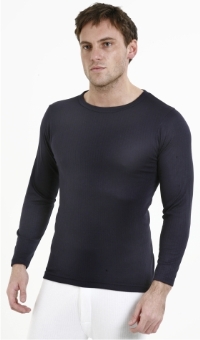
Xcelcius Thermal Underwear Long Sleeve Top XPV01

The Xcelcius Thermal Underwear Long Sleeve Top will feel like a second skin as it’s made out of blended soft viscose and polyester. This fabric is also very light and comfortable, so it’s suitable for wearing at work all day. You can wear this thermal top under any garment as its ideal for providing a performance layered base for everyday use. Not only can this garment be washed without losing its shape but it is also suitable for temperatures down to -5° Celsius.

Xcelcius Thermal Underwear Long Pants XPV03

The Xcelcius Thermal Underwear Long Pants transports moisture away from the skin through the fabric by the capillary action of the fibre, which allows you to stay warm throughout the day. This style of pant has a modern cut and fit so you can easily slip your trousers on over the top. Made from blended soft viscose and polyester, this garment is suitable for temperatures down to -5° Celsius.

Our complete collection of affordable thermal clothing will keep you protected and safe throughout winter. For the use in the most demanding conditions view our full product collection at Granite Workwear online or get in touch by calling us on 0115 964 0111.

Friday, 5 October 2012

New for October- A new and well developed range of Rock Fall Safety Footwear

At Granite this month we are extending our safety footwear collection to include the addition of a new range of Rock Fall Safety boots.

This range of lightweight safety footwear, all with composite toe caps and midsoles, is perfect for working on rail projects, civils and quarrying. Keep your feet safe and put less stress on your lower back – you will be a lot fresher at the end of a hard day.

The Rock Fall ‘Flint'

Now in stock is the Rock Fall ‘Flint’, with a lightweight composite toecap and anti-penetration protective midsole. For just £42.95, the ‘Flint’ provides excellent value for money – this water resistant safety boot is ideal for walking on ballast with its shock absorbing footbed making it the perfect footwear for the rail industry and ground works.

The Rock Fall ‘Titanium’

Later throughout this month you will be able to order the ‘Titanium’ and ‘Alaska’ Rock Fall safety footwear. The ‘Titanium’ safety boot is waterproof and features R-Ten abrasion resistant stitching thread and a lightweight composite toe cap and midsole. Perfect for the rail industry, utilities, civils, quarries and highways, this product is priced at just £59.95.

The Rock Fall 'Alaska'

The lightweight ‘Alaska’ Rock Fall safety boot has a temperature operating range of between –40°c to +300°c, as well as featuring Thinsulate© B600 thermal lining and a slip resistant rubber sole. Only £59.95 these boots are perfect for when the temperatures really drop.

For the use in the most demanding conditions, Rock Fall safety footwear will endure the toughest of situations, to view our full product collection visit Granite Workwear online or get in touch by calling us on 0115 964 0111.

Tuesday, 14 August 2012

Muck Boots – Quality, Practical and supremely comfortable


In the current day items like Wellington boots have become increasingly popular for a wide variety of people. You will usually find that these Wellington boots are waterproof and are most often made from rubber or polyvinyl chloride (PVC) a halogenated polymer. They are usually worn when walking on wet or muddy ground, or to protect the wearer from heavy showers and puddles. There are many brands of wellington boots available and one of the best is the ones by the Muck Boot Company.

Why should I buy wellies in the summer? – Just how predictable is our weather forecast?

If you are going to buy wellingtons then there are two things to consider:

Paying far too much for a pair of over-priced branded boots that you could have done just as well buying from the local hardware store, or buying from the local hardware store and get chilblains in winter and sweaty feet and blisters in the summer.

Muck boots are just so comfortable you will forget that you have them on. Once tried you are very likely to be a convert. As with all original innovative products there are several cheaper copies so beware and be careful that you buy the originals. Farming, Veterinarian, Wetland management and all of the regular country activities like hunting, shooting and fishing and gardening are catered for.

The Original Muck Boot Company’s purpose was to build the most comfortable, high performance footwear on the market. The need for a more comfortable boot for use in messy and tough conditions has become more popular in England as people are getting increasingly fed up with the unpredictable British weather meaning that these boots can be put to use when it’s raining heavily, farmers working and muddy conditions, or even emerging trends where people are now wearing things like muck boots to festivals because of the weather conditions making it muddy.

The Muck Boot Company has firmly established themselves as the standard of comfort and quality that goes beyond the expectations of customers around the country. These boots have almost become the ones you look to when you are looking for great quality wellington boots that won’t fail you in any situation. You can find these Muck Boots on the Granite Workwear website, where there is a variety of Muck Boots available.

Such as the Spey Muck Boots:
Spey muck boots


And the Esk Muck Boots:
Esk muck boots

Monday, 30 July 2012

How Important Is Comfort In Trainers?

With the summer time now here, more outdoor activities being done is called for, whether this is just going for a walk in the park, cycling or even just going for a walk round the town all this is sure to leave your feet hurting, unless you have really comfortable trainers, meaning that comfortable trainers almost become a necessity.

Luckily here at Granite Workwear we have just the thing in our special offers section of the webpage, these are trainers that are made by V-Tech both are very lightweight and breathable, providing decent comfort. You’ll see that the prices slashes on these trainers are as much as 38% off. So surely this is a win/win situation you get a decent quality pair of trainers that will keep you comfortable whilst you enjoy the wonders of the of the summer. However not only will these pair of trainers be useful in this situation, they will be useful in almost any situation especially when you have to travel far by foot so whether you are taking the dog for a walk or working on your feet all day, the V-Tech trainers will be the best value for money to get the job done.

With the V-Tech Aviation Non Metallic Safety Trainers costing just £39.95 which is almost 33% Off and the V-Tech Wing Non Metallic Safety Trainers costing £39.95 resulting in a massive 38% Off these are deals that surely have to be snapped up!

V tech trainer

V tech trainer 2

Monday, 23 July 2012

Free Regatta Boot Bag at Granite

At Granite we believe that quality comes before expensive.  We don’t risk your safety in order to provide you with cheap deals, instead we use the best materials available and offer the best value for money.

Our latest deal of a free Regatta Boot Bag reflects our best value for money promise. With any purchase from our range of safety boots you will receive a high quality Regatta Boot Bag from us here at Granite.

The TRB07 Regatta Boot Bag is made of hard wearing 600 Denier Polyester which is durable for any of your working needs. The bag contains a zip opening, studded feet to protect the bottom surface of the bag, an internal baseboard and a webbing carry handle for ultimate comfort.


This exclusive offer includes the Goliath HM2001WSI Foundry safety boot which has quick release fasteners, a heat resistant sole that can withstand 300 degrees C and dual density shock absorbing rubber sole. For only £47.94 including VAT, this product will make sure you are in safe hands.

Another product included in our deal is the V-Tech Mohawk safety boot V1244 made of cowhide leather and comes with ankle support with impact protection. Priced at only £77.94 including VAT, this product is resistant to oil, acid, alkali and hydrocarbon.

This offer is exclusive to our range of safety boots, NOT our range of shoes or trainers. For more information please don’t hesitate to contact us.

Wednesday, 27 June 2012

Rail High Vis Clothing Explained

With projects such as Crossrail, HS2, main line electrification, modernisation of the London Underground network and Thameslink. The rise in infrastructure investment over the next three years is significant. This will result in many new businesses taking up contracts in these projects.

So, what to wear? This is one of the most regulated sectors in the UK for PPE.

Rail personnel perform a wide range of essential outdoor work in all weathers. The risks are many and varied. Electrical hazards, visibility issues, oils & chemicals, sparks & flame from cutting & welding, exposure and general construction hazards to name but a few. In many instances the tasks have to be performed within a tight time window so the last thing you want is to be turned off site for non-conforming high vis or stuck in the middle of nowhere in a blizzard and find that your clothing is not as watertight as you were led to believe.

Fit for purpose, comfort and durability are very important. Adopting a multi-layer system should be considered due to our four seasons in one day weather we tend to have. Layers can be added or removed depending on the weather but still be compliant with the governing regulations. Make sure that the layers are designed to fit over each other.

PPE (high vis) workwear has to comply with a series of standards that are specific to the rail industry.

The rail industry’s own standard is GORT 3279. This relates in part to the reflectance / fluorescence of the orange pigment in the clothing.

WARNING – Not all orange high visibility clothing meets this standard. Do not purchase or wear any high visibility clothing that does not conform to this standard. You will be able to check this in three ways.

1. On the printed care label.
2. On the user information sheet that should come with all individual pieces of PPE.
3. By requesting the supplier to forward you a copy of the certificate that relates to the PPE.

In addition to the GORT 3279, all of the relevant EN regulations for high visibility clothing, FR, anti-static, electric arc etc & etc. have to be complied with depending upon the tasks to be performed.

On June 1st 2007, Network Rail also made it compulsory for anyone working on their railway to have adequate breathable clothing. This means that all waterproof / foul weather gear must conform to EN373: 2003 and be class 3 breathable and class 3 waterproof. Again – if not sure then seek proof from your PPE supplier by way of certification copies and check the user information sheet / care label.

During a 6 month review of alternative products within the UK market a leading manufacturer of GORT3279 workwear found that over 85% of products did not stand up to the rigours of wash and high vis tests after wearer trials. Differences between batches of clothing and dye lots were also apparent. Buyers beware. Good quality and durable rail compliant clothing makes sense and is significantly more cost effective.

Granite Workwear Ltd. stocks 3 of the most reliable brands in the business. Pulsarail, Sioen and Cosalt. All three manufacturers invest heavily in product development and have an excellent track record as regards quality and durability.

Sizes ranging from extra small to 7XL, trousers up to a 54” waist and high vis trousers designed for a ladies fit are all stocked in depth. Basically, if we haven't got it in stock them it’s not in the country!

We also print and embroider company logos and names, sometimes with a 24 / 48 hour supply.

Friday, 27 April 2012

Hi Visibility Clothing


High-visibility clothing is a type of personal protective equipment that has highly reflective properties. These properties help keep workman safe in potentially dangerous situations.

A European Standard for high-visibility clothing deals with high-Visibility Specifications.
There are three levels of protection:


  • Class 1 Class 1 defines the lowest visibility level e.g. High-visibility trousers with two 5 cm reflective bands around each leg. These become Class 3 when worn with a Class 3 jackets.
  • Class 2 The class 2 defines an intermediary visibility level. Example: vests. Two 5 cm bands of reflective around body or on one 5 cm band around body and braces to both shoulders.
  • Class 3 the class 3 defines the highest level of visibility. Example jacket with long sleeves, jacket and trouser suit. Two 5 cm bands of reflective tape around the body, arms and braces over both shoulders.


At Granite we pride ourselves in standing out for High Vis clothing, especially when it comes to quality, price and more importantly conforming to the EN471 standards. Our many years in this industry means we have vast knowledge and expertise on the high Vis vest market, therefore when buying from Granite you can be sure you have been supplied with the highest quality available.

Whether you’re working in hot or cold weather, Hi-Vis jackets and Hi-Vis waistcoats keep you safe and at the right temperature. Our comprehensive range includes the Hi-Vis Bodywarmer, shirts, jackets, fleeces and coats. Sometimes you need a lighter touch and that’s why we sell our Hi-Visibility Poloshirt which will keep you cool when you’re working hard.

This range is suitable for all sizes, shapes and working conditions and is guaranteed to offer visibility and protection to workers for many years.

For further information on our range of high Vis clothing call us on: 01159640111 or alternatively message us via our contact page, we'd love to hear from you!

Tuesday, 7 February 2012

Waterproof Thermal Overalls

So what is the choice? - Which ones should I go for?
This depends very much on the activity and the amount of physical effort you will be expending. Some are warmer than others and some of the outer fabrics breathe more efficiently.
Let's start at the least expensive. Both retailing at £49.95 + VAT. There are two good entry level products to choose from:-

The first is the Dickies waterproof and padded overalls:

http://www.graniteworkwear.com/p-Waterproof_padded_overall-158.aspx these are great for driving around on an ATV or the occasional pressure washing. The thermal insulation is quite thick and the outer fabric is not breathable so we would not advice running about too much but great for keeping you warm. There are added features such as the reflective tapes, a padded hood with a Velcro closure and some light reinforcement at the knees.

The second is the Baleno Arctic coveralls:

http://www.graniteworkwear.com/p-Baleno_Arctic_Overalls-7764.aspx new to us this autumn, we have had some good feedback particularly from those north of the border who have had to deal with some torrid weather. Not quite as thermally insulating as the Dickies but with a more durable outer waterproof fabric and a better construction. These would outlast the Dickies and whilst you derriere would always look big in lined overalls - the fit of these would make you look less of a Michelin man. Features include a wind and waterproof integral hood that folds away in the collar and zipped and gusseted ankles to aid in the removal of boots. This would also double as a leisure garment more readily than the Dickies.

The next step up gets us into the High Vis overalls and there is a choice of two excellent products.

The first is the Pulsarail PR505:

http://www.graniteworkwear.com/p-Pulsarail_PR505_High_Vis_Overall-7921.aspx with its accompanying Thinsulate liner, G100/COV that zips into the waterproof outer http://www.graniteworkwear.com/p-Pulsarail_G100COV_Thinsulate_Liner_for_PR505-7922.aspx. The outer is a class 3 breathable and waterproof overall that is also EN471 Class 3 high vis and GORT 3279 Rail use approved. This is a great all year round product that can be used without its liner in the warmer months and then have its Thinsulate liner zipped in for a snug winter warmer. This is also great for laundering the two parts separately and not having to wait too long for them to dry. No corners have been cut with the accessories. This is a real all rounder that covers all of the bases - unless you are going hunting.
The last is saced for those that really feel the cold.
The Sioen Rabul 5616:

A favourite for those that work on onshore windfarms; steel stock holding yards and anywhere else you are likely to find wet brass monkeys.  http://www.graniteworkwear.com/p-Flexothane_Rabul_5616_High_Vis_Thermal_Overalls-7878.aspx & http://www.graniteworkwear.com/p-Flexothane_Rabul_5616_High_Vis_Yellow_Thermal_Overalls-7879.aspx there is an option of Yellow / Navy High vis or Orange / Navy High vis. Both EN471 High vis and with a class 3 waterproof and class 2 breathable outer fabric in Flexothane Classic. These are the only overalls with a stretchable outer fabric that gives easily with the body and has ergonomically cut sleeves for an excellent range of movement. The fabric is well proven over many years of use. These really are the best on the market and the best priced on the web. Just how much would you pay to stay warm and dry all day?

Thursday, 19 January 2012

Hi Vis Soft Shell Jackets

Just arrived at Granite Workwear this month is the smartest high visibility soft shell jackets on the market, the Pulsar P534 High Vis Soft Shell Jacket and the Pulsarail PR535 High Vis Soft Shell Jacket

The Pulsar P534 High Vis Soft Shell Jacket has fantastic features, such as:

  • Stand up collar
  • Two hidden vertical zip hip pockets
  • Front flap covering the main zip
  • Elasticated waistband with draw cord
  • Wrap around branded rubber cuff adjusters
  • Thermally applied reflective tape


This smart high visability jacket is also wind proof and stretchy and can easily be zipped in to the P421 unlined storm coat when you really need protecting from bad weather, the jacket also conforms to the technical standard EN471 class 3. Available in sizes S to 3XL and at a fantastic price of £47.94 including VAT, you can't go wrong with Granite Workwear.

With the same features as the Pulsar P534 High Vis Soft Shell Jacket the Pulsarail PR535 High Vis Soft Shell Jacket has a YKK zip front fastening which allows it to be zipped into the waterproof unlined storm coat PR499, also the ;Pulsarail PR535 complies with not only the EN471 class e but the rail spec GO/RT 32791.

Available in sizes S, M, L, XL, 2XL and 3XL order yours online from Granite Workwear today for only £47.94 including VAT.

Friday, 13 January 2012

Granite Workwear exhibiting at LAMMA 2012 for the 6th Year

The 31st LAMMA agricultural machinery show takes place at the Newark and Nottinghamshire Showground, Winthorpe Newark NG24 2NY this year on Wednesday & Thursday 18th – 19th January. A major show in the farming calender for both UK and overseas farmers. With over 800 exhibitors it is one of Europes major agricultural events showcasing equipment for the smallholder up to the largest estates. 30 Years ago it was free to attend and cheap to exhibit and it soon became a place of pilgrimage for all those who love their farm machinery. 30 years later it is exactly the same and has turned into the largest agricultural show in the country.

Granite Workwear Ltd has been exhibiting for the past 6 years and has a healthy relationship supplying the farming industry having grown out of the original business of free range outdoor reared pork and free range eggs. This year we have increased the stand space (Hall 2 / Stand 233) yet again to cope with demand and as usual will be offering several ‘Show Specials’

There’s a strong turnout of livestock equipment manufacturers as well as firms that repair and refurbish equipment.

The show is one of few that can honestly profess to have the visitor at heart. Free parking and free entry have been maintained yet again. Making this an excellent day out and a show not to be missed. It’s not all about big arable kit.

Granite Workwear will be offering our comprehensive range of high quality PPE, High Vis, Safety Boots, Muck Boots, and Overalls and will have a complete range of Thermals to combat the recent weather conditions.